Health and Safety Policy for Carpet Cleaners W1G
 This health and safety policy sets out the principles and working practices that support safe, responsible, and consistent carpet cleaning operations. It applies to all staff, supervisors, and subcontractors involved in carpet cleaning services, with a focus on preventing injury, reducing risk, and maintaining a clean working environment. The policy is designed to protect workers, clients, visitors, and property while ensuring that every carpet cleaner works to a clear standard of care.
All activities must be carried out in a way that is safe, planned, and proportionate to the task. Before any cleaning begins, the condition of the area should be assessed, hazards identified, and suitable controls put in place. This includes checking for wet floors, electrical risks, fragile surfaces, hidden obstacles, poor ventilation, and the presence of people who may be affected by equipment or cleaning products.
Every carpet cleaning operative is responsible for following safe procedures, using equipment correctly, and reporting hazards promptly. Safety is not separate from quality; it is part of delivering a reliable service. A well-managed carpet cleaning policy helps ensure that tasks are completed efficiently without exposing anyone to unnecessary risk.
 Risk assessment is central to this policy. A suitable assessment should be completed before work starts, especially where access is difficult, carpets are heavily soiled, or additional equipment is required. The assessment should consider manual handling, use of cleaning chemicals, slip and trip risks, power supplies, and safe movement of hoses, cords, and machinery. Controls must be reviewed if conditions change during the job.
Equipment must be maintained in good working order and used only for its intended purpose. Vacuum units, extraction machines, sprayers, and ancillary tools should be inspected before use and taken out of service if defects are found. All cables should be positioned to reduce the chance of tripping, and machines should be switched off before adjustments, emptying, or cleaning. Carpet cleaners should never bypass safety features or use makeshift repairs.
Chemical safety is equally important. Cleaning products must be stored securely, labelled clearly, and used in accordance with manufacturer instructions. Only suitable dilution rates should be applied, and personal protective equipment should be worn where needed. Good ventilation should be maintained during cleaning, and incompatible substances must never be mixed. Any spill should be contained and cleaned immediately using an appropriate method.
 Manual handling presents one of the most common risks in carpet cleaning work. Staff should use correct lifting techniques, seek assistance for heavy items, and break down tasks where possible. Equipment should be moved using wheels, trolleys, or other aids when available. Repetitive movements and awkward postures should be reduced through planning, rotation of tasks, and sensible scheduling.
Slip prevention must be managed carefully because cleaning often involves moisture. Floors should be kept as dry as reasonably possible, warning signs should be used where surfaces remain wet, and access routes should be controlled until they are safe. Areas should not be left unattended in a condition that could cause injury. When working near entrances or shared spaces, extra care is required to protect occupants and passers-by.
Fire and electrical safety are also essential. Portable electrical equipment must be checked before use, and any damaged plug, lead, or socket must be reported immediately. Water must be kept away from live electrical parts, and extension leads should be used in a manner that avoids overloading. Safe carpet cleaning practice includes maintaining clear access to exits and ensuring that emergency routes are never blocked by tools or materials.
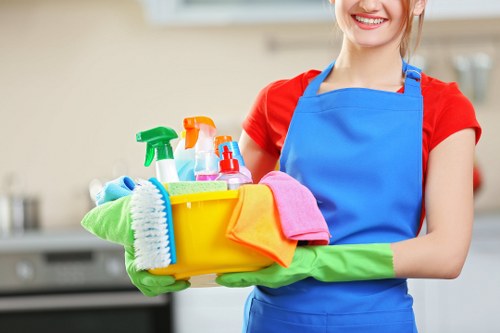 Training and supervision support the effective operation of this policy. Workers should receive instruction on safe methods of work, correct use of cleaning systems, emergency response, and hygiene controls. Supervisors should monitor performance and intervene if unsafe behaviour is observed. New staff or temporary workers should not be left to work unsupervised until they have demonstrated competence.
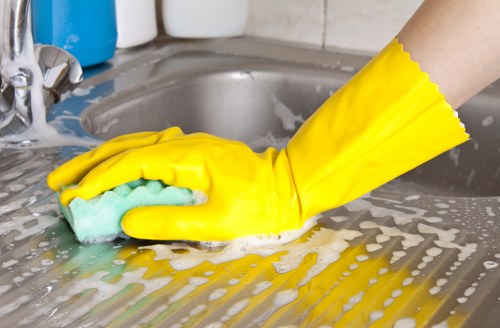
Personal protective equipment, where required, should be selected based on the risk involved. This may include gloves, non-slip footwear, eye protection, or other items suited to the task. PPE must be worn correctly, kept clean, and replaced when damaged or worn out. While PPE is important, it should be treated as the final layer of protection rather than the main control measure.
Good hygiene standards help reduce health risks during and after cleaning work. Hands should be washed after using chemicals, handling waste, or removing protective equipment. Food and drink should not be consumed in work areas where cleaning chemicals or contaminated materials are present. Waste materials should be handled responsibly, and any contaminated cloths, pads, or disposable items should be removed promptly and disposed of safely.
 In the event of an incident, the priority is to make the area safe, provide first aid where needed, and report the matter without delay. Spills, injuries, near misses, and equipment failures should be documented so that patterns can be identified and future prevention measures strengthened. Health and safety policy for carpet cleaners should be reviewed regularly to ensure it remains current, effective, and aligned with actual working conditions.
Management is responsible for providing the resources needed to implement this policy, including suitable equipment, training, supervision, and maintenance support. Employees are expected to cooperate fully, follow instructions, and raise concerns where standards are not being met. By working together, the team can deliver safe carpet cleaning operations that protect people, property, and professional standards.
Ultimately, this policy reflects a commitment to careful planning, competent working, and continuous improvement. Safe practice benefits everyone involved and supports a dependable service built on responsibility and awareness. Through consistent application of these measures, Carpet Cleaners W1G can maintain a strong safety culture across every job.